Biological system
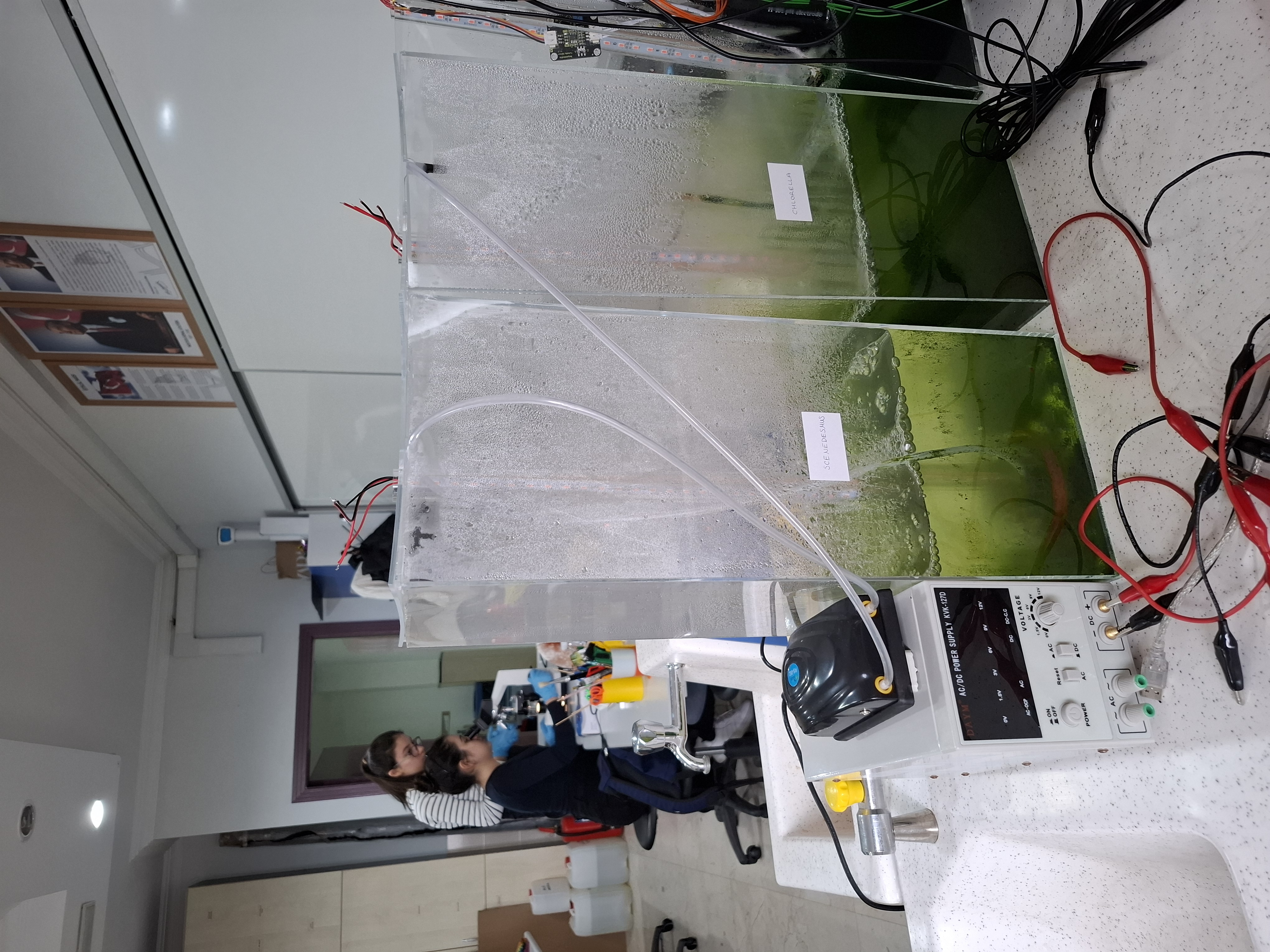
Spirulina, Chlorella, and Scenedesmus cultures are compared under controlled reactor conditions.
 ALGliving carbon lab
MICROALGAE • DIGITAL BIOMONITORING • CARBON MANAGEMENT
ALG is an experimental platform investigating the carbon capture and biomass potential of microalgae through low-cost sensors, real-time data, and controlled photobioreactor conditions.
RESEARCH QUESTION
The project seeks to define controlled cultivation conditions by observing microalgal metabolic responses in real time. An air-lift reactor circulates the culture, a sensor network makes environmental variation visible, and a digital interface supports data-informed experimental decisions.
EXPERIMENTAL APPROACH
Spirulina, Chlorella, and Scenedesmus cultures are compared under controlled reactor conditions.
CO₂, O₂, pH, temperature, dissolved oxygen, turbidity, and TDS are monitored concurrently.
Arduino-based acquisition is combined with Python-supported processing and real-time visualization.
Sensor patterns are interpreted alongside microscopy-assisted cell counts and culture observations.
PRELIMINARY FINDINGS
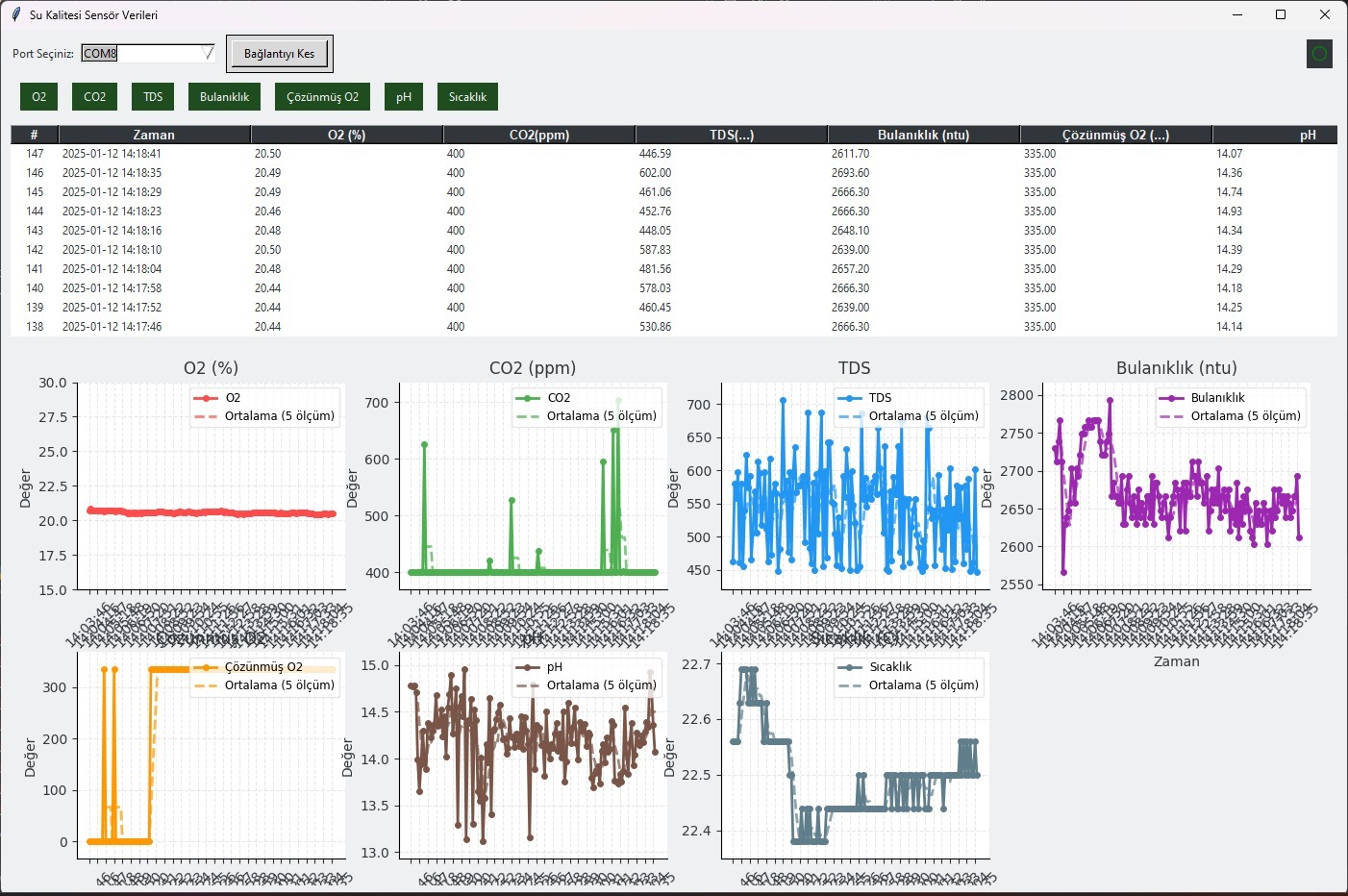
Full-spectrum illumination was associated with higher photosynthetic oxygen production under the tested conditions.
Under controlled CO₂ enrichment (7,000–10,000 ppm), reactor O₂ increased from 20.5% to 22.1%.
Spirulina showed the strongest adaptive response under combined high-CO₂ and full-spectrum light conditions.
EVIDENCE BOUNDARY
The findings derive from laboratory-scale prototype experiments. The observed O₂ increase cannot be treated as a direct, scalable measure of carbon removal. Net CO₂ fixation rate, biomass yield, energy balance, and long-term culture stability still require quantitative validation.
RESEARCH TEAM
Balıkesir University
korkusuz@balikesir.edu.trŞehit Prof. Dr. İlhan Varank Science and Art Center
nihalkorkusuz@hotmail.comResearch, Development, Education and Application Center High School
aysesenatureyen@gmail.comŞehit Prof. Dr. İlhan Varank Science and Art Center
dlrgndz2000@gmail.comŞehit Prof. Dr. İlhan Varank Science and Art Center
erengunay10@gmail.comThis page synthesizes 2024–2026 scientific reports, project submissions, experimental records, a conference paper, and reviewer feedback. Market projections are kept separate from experimental findings.